Stepping into the property market feels like walking into a conversation that’s been going on for years without you. Estate agents casually mention “chains” and “gazumping” as if everyone knows exactly what they mean — but you’re left wondering if you missed some crucial lesson somewhere along the way.
You haven’t. We understand that buying your first home already feels overwhelming enough without having to decode a whole new vocabulary. Yet here’s the thing — this terminology isn’t just professional showing off. Understanding what estate agents actually mean when they say “no onward chain” could save you months of stress, while knowing your rights around Stamp Duty as a first-time buyer might keep hundreds of pounds in your pocket.
When sellers mention their property has “no onward chain,” they’re telling you something valuable — they don’t need to buy another home before selling to you. This usually means a smoother, faster transaction compared to properties caught up in lengthy chains. These aren’t just nice-to-know details; they’re the difference between a confident purchase and months of uncertainty.
Every property story deserves to be told clearly — and yours should be filled with understanding rather than confusion. These 27 terms aren’t just estate agent speak; they’re your toolkit for making informed decisions, asking the right questions, and finding the home that’s truly right for you. Because when it comes to the biggest purchase of your life, knowledge isn’t just power — it’s peace of mind.

Image Source: Finbri
Before you fall in love with a property you can’t afford, there’s one document that saves you from heartbreak — an Agreement in Principle. This isn’t just paperwork; it’s your financial reality check and your ticket to being taken seriously in a competitive market.
Agreement in Principle meaning
An Agreement in Principle gives you a clear picture of what lenders might offer you based on your current financial situation. You’ll see it called different names — Decision in Principle, Mortgage in Principle, Mortgage Promise, or Lending Certificate — but they all mean the same thing. Think of it as a lender saying: “Based on what we know about you right now, here’s roughly what we could lend.”
The beauty of this process lies in its simplicity. It involves only a soft credit check that won’t damage your credit score, and crucially, it’s not a legally binding commitment from either side. It’s an estimate, not a promise — but it’s an estimate that opens doors.
Agreement in Principle example
Getting your AiP couldn’t be more straightforward. You’ll share basic details about your income, outgoings, and where you’ve lived over the past three years. Most lenders make this available online, through their apps, or via a mortgage adviser. The entire process typically takes around 10 minutes, with many lenders providing instant decisions between 6am and 10pm on weekdays.
Agreement in Principle importance for first-time buyers
For first-time buyers, an AiP delivers three crucial advantages. First, it sets your budget boundaries before you start viewing properties, preventing you from falling for homes that are financially out of reach. Second, it highlights any credit file issues early, giving you time to address them. Third, it transforms you from a hopeful browser into a serious buyer in the eyes of estate agents and sellers.
Agreement in Principle and estate agent terminology
Here’s where understanding estate agent speak becomes valuable. When you have an AiP, you become what they call a “proceedable buyer” — someone who’s done their homework and can actually follow through on offers. Estate agents and sellers pay attention to buyers who’ve taken this step. Your AiP shows you’re serious about the process and understand your financial boundaries, which becomes particularly important when multiple buyers are competing for the same property.
Most AiPs remain valid for 60-90 days, giving you a comfortable window to find your ideal home while demonstrating to everyone involved that you mean business.

Image Source: LendingLine
Behind every mortgage application sits a simple but powerful number — your Loan-to-Value ratio. This percentage shapes everything from whether you’ll get approved to how much you’ll pay each month.
Loan-to-Value (LTV) meaning
LTV represents the proportion of your property’s value that you’re borrowing through a mortgage, expressed as a percentage. Think of it as the relationship between your mortgage amount and the property’s value. Purchase a home valued at £250,000 with a £200,000 mortgage, and your LTV becomes 80%. Lenders use this ratio to assess the risk of lending to you.
Loan-to-Value (LTV) example
The calculation couldn’t be simpler:
- Divide your mortgage amount by the property value
- Multiply the result by 100 to get a percentage
Save a £50,000 deposit for a £250,000 home? You’ll need a £200,000 mortgage. Your LTV calculation becomes: £200,000 ÷ £250,000 = 0.8 0.8 × 100 = 80% LTV
The golden rule holds true — the larger your deposit, the lower your LTV ratio.
Loan-to-Value (LTV) importance for first-time buyers
This number carries real weight in three crucial areas:
Your approval chances: Lenders view LTV as their risk indicator. A lower ratio means a larger deposit, which significantly improves your approval odds.
Interest rates: Here’s where LTV becomes expensive. Crucial thresholds exist at 95%, 90%, 80%, 75%, and 60% where rates drop noticeably. Drop from 95% to 90% LTV on a £150,000 property, and you could save £500-£600 every year.
Insurance requirements: Exceed 80% LTV, and you’ll typically face private mortgage insurance, adding 0.5%-1% to your annual loan amount.
Most lenders consider anything below 80% LTV as favourable territory. First-time buyers often start higher, but here’s something worth considering — if your deposit places you just shy of an LTV threshold, scraping together even a small additional amount could save thousands over your mortgage term.

Image Source: en.wikipedia.org
Fixed-rate mortgages represent the steady choice in a world of financial uncertainty. When mortgage advisers mention this option, they’re talking about a loan where your interest rate remains constant for an agreed period — usually 2, 3, 5, 7, or 10 years. Think of it as locking in your monthly payment, creating a foundation of certainty while everything else fluctuates around you.
What fixed-rate mortgages actually mean
Your monthly payment stays identical throughout the fixed term, regardless of what happens to the Bank of England base rate. Whether rates soar or plummet, your mortgage statement remains the same. This predictability makes fixed-rate mortgages particularly appealing to first-time buyers who need to budget carefully for their new life.
Consider this: secure a 2-year fixed rate at 3.99% with a £999 booking fee, and your repayments won’t change for 24 months. On a £200,000 mortgage, you’ll know exactly what leaves your account each month. Once the fixed term ends, you’ll automatically move to your lender’s Standard Variable Rate — currently around 6.74% — unless you choose to remortgage.
The fixed-rate balance sheet
What works in your favour:Your monthly payments remain identical throughout the fixed term, making household budgeting straightforward. You’re protected from rising interest rates during your fixed period. No nasty surprises arrive in your mortgage statements.
What might work against you:Fixed rates typically start higher than variable mortgage rates. Leaving early often means substantial fees. If market rates fall, you won’t benefit without refinancing. Most lenders cap overpayments at 10% annually.
The choice often comes down to this: longer fixed terms provide extended security but might cost you if rates drop. Shorter terms offer flexibility but expose you to potential rate increases when you remortgage. For many first-time buyers, the peace of mind trumps the potential savings — and that’s perfectly reasonable when you’re building your new life on solid ground.
Variable-Rate Mortgage
A variable-rate mortgage has an interest rate that can change over time, moving up or down with the Bank of England base rate or your lender's SVR. Monthly payments are not fixed and can increase if rates rise.

Image Source: Investopedia
Where fixed-rate mortgages offer certainty, variable-rate mortgages bring flexibility — and a healthy dose of unpredictability. Your monthly payments can rise or fall based on market conditions, which means budgeting becomes more of an art than a science.
Variable-Rate Mortgage meaning
Variable-rate mortgages tie your interest rate to market movements, typically tracking the Bank of England base rate, currently at 4.25%. When rates go up, so do your payments. When they fall, you benefit immediately. No waiting. No switching. Just automatic adjustments that reflect the economic climate.
These mortgages come in three main flavours:
Tracker mortgages follow the Bank of England base rate plus a set margin. Pure and simple — when the base rate moves, your rate moves by exactly the same amount.
Standard Variable Rate (SVR) represents each lender’s default rate. You’ll typically land here when introductory deals end, and lenders can adjust these rates whenever they choose.
Discounted rate mortgages offer a reduction on the lender’s SVR for a fixed period, usually 2-3 years.
Variable-Rate Mortgage example
Consider a tracker mortgage at base rate plus 1%. With the current base rate at 4.25%, you’d pay 5.25%. Should the base rate jump to 4.75%, your rate automatically becomes 5.75% — no paperwork, no delay.
Discounted rates work differently. If a lender’s SVR sits at 6% and you receive a 2% discount, you’ll pay 4%. But if that lender decides to raise their SVR to 6.5%, your discounted rate climbs to 4.5%.
Variable-Rate Mortgage pros and cons
The benefits are clear:
- Falling interest rates mean immediate savings on your monthly payments
- Greater flexibility for overpayments without penalty charges
- Fewer restrictions when switching to new deals or different lenders
- Often no early repayment charges to worry about
The challenges are equally real:
- Unpredictable payments make household budgeting more complex
- Rising rates can significantly increase your monthly costs
- Some lenders set “collars” — minimum rates that prevent you benefiting from very low base rates
- Economic uncertainty directly affects your mortgage payments
Your choice between fixed and variable rates ultimately comes down to your comfort with uncertainty. Fixed rates buy you peace of mind. Variable rates offer the potential for savings — but only if you can sleep soundly knowing your payments might change.

Image Source: MoneyHelper
When you see “freehold” in a property listing, you’re looking at something special — complete ownership that truly makes a house your own. This isn’t just estate agent terminology; it’s about the difference between owning your space and merely occupying it.
Freehold meaning
Freehold ownership means the property and the land beneath it belong to you entirely. No time limits, no landlord to answer to, no ground rent eating into your monthly budget. You hold what’s legally called “title absolute” — and it’s exactly as comprehensive as it sounds.
Most houses come as freehold properties, while flats typically don’t. This distinction matters more than you might initially think, affecting everything from your monthly outgoings to your freedom to paint the front door whatever colour takes your fancy.
Freehold example
Picture buying that £300,000 detached house in Manchester you’ve been dreaming about. When it’s advertised as freehold, you’re purchasing both the building and every square foot of garden — yours to enjoy, maintain, and modify as you see fit.
Practically speaking, freehold ownership means:
- You maintain and insure the property yourself
- Renovations and extensions need only planning permission, not a landlord’s approval
- The property remains in your family until you choose otherwise
- No monthly payments to anyone except your mortgage lender
Freehold vs Leasehold
Understanding this distinction could save you thousands and years of frustration. We’ve seen too many first-time buyers overlook these differences, only to discover unexpected limitations and costs later.
Your control: Freehold gives you complete autonomy over modifications and improvements. Leasehold requires permissions and often prohibits changes you’d take for granted.
Ongoing expenses: Freeholders handle their own maintenance costs but avoid ground rent and service charges. Leaseholders face these additional monthly obligations regardless of their property’s condition.
Long-term value: Freehold properties typically hold their value better — there’s no ticking clock of a diminishing lease to worry potential buyers. When you’re ready to sell, this simplicity often translates to smoother transactions and stronger offers.
Because at the end of the day, homeownership should feel like exactly that — ownership, not a complicated arrangement with strings attached.

Image Source: Foxtons
Leasehold properties dominate the flat market, yet this term catches many first-time buyers off guard. Unlike freehold, where ownership is straightforward, leasehold brings ongoing obligations that deserve your full attention before you sign anything.
Leasehold meaning
With leasehold, you’re buying the right to live in a property for a specific timeframe — typically between 90 and 999 years — but the land beneath remains someone else’s. The freeholder (your landlord, essentially) grants you exclusive use during the lease period. Most flats and maisonettes follow this arrangement, along with some houses, particularly new builds where developers retain land ownership.
Leasehold example
Picture buying a London flat with 125 years left on the lease. You own that flat until the lease expires, when ownership reverts to the freeholder. Here’s what matters: lease length directly affects both value and mortgage availability. Properties with fewer than 80 years remaining become harder to sell and mortgage, while extending short leases gets progressively more expensive as time runs out.
You typically gain the right to extend your lease after two years of ownership, but this isn’t automatic — it requires legal processes and often substantial costs.
Leasehold costs explained
Leasehold ownership means ongoing payments beyond your mortgage:
Ground rent covers the land your property occupies. Recent legislation abolished ground rent for new leases after 30 June 2022, setting them at a “peppercorn” rate, but existing leases may still carry significant annual charges.
Service charges fund communal area maintenance, building insurance, and repairs. Expect £1,000 to £2,000 annually for most flats, potentially much higher for new builds or London properties.
Administration charges apply when you need permissions — subletting, alterations, or information requests — or if you breach lease terms.
Reserve funds build reserves for major future works like roof replacement or lift maintenance.
These costs continue regardless of whether you use the services, and service charges can increase unpredictably. Before purchasing any leasehold property, scrutinise all lease terms carefully — unexpected obligations can significantly impact your long-term affordability.

Image Source: Tembo
Sometimes the path to your own front door isn’t straightforward — and that’s perfectly fine. Shared Ownership offers a different route for those who find traditional purchasing beyond their reach, yet still dream of having a place to truly call home.
Shared Ownership meaning
Shared Ownership is a government-backed scheme that lets you buy a slice of a property (typically between 10% and 75%) while paying rent on the rest, which stays with a housing association. Most people start with a 20-30% share, and here’s what makes it appealing — your deposit is calculated on just your share, not the full property value. We’re talking 5-10% of your portion rather than the whole amount. Worth knowing upfront: all Shared Ownership properties come as leasehold, houses included.
Shared Ownership example
Picture a £400,000 property where you buy a 40% share — that’s £160,000 of ownership with rent due on the remaining £240,000. With the standard 2.75% annual rent calculation, you’d pay roughly £550 monthly. You’re still responsible for all service charges and ground rent, regardless of your ownership percentage. The beauty lies in “staircasing” — buying additional shares over time. Add another 30% to your ownership, and that £550 rent drops to £275 monthly.
Shared Ownership pros and cons
What works in your favour:
- Smaller deposit requirements make the initial step more manageable
- Mortgage accessibility improves, even with modest incomes
- Gradual ownership increases let you build equity over time
- Monthly costs often beat private rental rates
- Stamp Duty relief applies to many initial purchases
What requires careful consideration:
- Maintenance responsibilities fall entirely on you, despite partial ownership
- Rent typically increases annually — RPI plus 0.5% for pre-October 2023 leases
- Service charges and ground rent remain your full responsibility
- Property alterations may need approval
- Selling becomes more complex without 100% ownership — housing associations often hold first refusal rights
This scheme works well for those who can’t stretch to full ownership yet want stability and the chance to build something lasting. It’s about finding the right solution for your circumstances, not just the one that looks perfect on paper.

Image Source: Bayzos Estate Agents
Your offer’s been accepted — and suddenly everyone’s talking about conveyancing like it’s something you should obviously know about. This legal process stands between you and your front door keys, yet most first-time buyers have never heard the term before.
Conveyancing meaning
Conveyancing is simply the legal handover of property ownership from seller to buyer. Think of it as the bridge between saying “yes, I’ll buy it” and actually holding the keys to your new home. Your conveyancer handles all the legal paperwork, arranges essential property searches, and makes sure nothing nasty is hiding in the small print.
Conveyancing process
The process typically takes 8-16 weeks, though simpler transactions might complete in 8-10 weeks. Leasehold properties often take longer due to additional paperwork requirements — another reason why understanding property types matters.
Three key stages shape your conveyancing journey:
- Pre-contract: property searches, contract reviews, survey coordination
- Exchange of contracts: legal commitment sealed with your deposit
- Completion: final payment transferred, keys handed over
Property searches form the detective work of conveyancing, investigating local authority plans, environmental concerns, and drainage connections. These searches cost between £250-£1,500 but protect you from discovering unwelcome surprises after moving in.
Choosing a conveyancer
You have two main choices: licensed conveyancers who specialise in property transactions, or solicitors who can handle broader legal complexities. Either works fine for straightforward purchases.
Look for these essential qualities:
- Experience with your property type (crucial for leasehold or shared ownership)
- Quick response times to your questions
- Solid reputation backed by genuine reviews
Conveyancing fees typically range from £800-£1,500 for the legal work, plus disbursements for third-party costs. Many firms offer “no sale, no fee” protection, so you won’t pay legal fees if your purchase falls through.
Estate agents often recommend conveyancers, but you’re free to shop around. Sometimes the cheapest isn’t the best value — especially if poor communication delays your purchase.

Image Source: Bayzos Estate Agents
The moment when your property dreams become legally binding commitments — Exchange of Contracts represents the single most significant milestone in your buying journey.
Exchange of Contracts meaning
Exchange of Contracts marks the point when both you and the seller become legally committed to complete the transaction. Identical contracts are formally exchanged between your respective solicitors or conveyancers, typically through a recorded telephone conversation where each side confirms the contracts match before posting the physical documents. Until this moment, either party can walk away without legal consequences — but once contracts are exchanged, you’re both bound to proceed.
This isn’t just paperwork. It’s the moment when your offer transforms from a hopeful agreement into a legal obligation, creating security for both sides while establishing the foundation for your move-in date.
Exchange of Contracts timeline
Most exchanges happen between 10am and noon, giving solicitors the morning to handle any last-minute details. The gap between exchange and completion typically spans 7-28 days, with most buyers choosing about a week. This timeline depends on several practical considerations:
- Your mortgage arrangements and any final processing requirements
- Property chain coordination where multiple transactions must align
- Removal logistics and your moving preparations
- Availability of all parties involved in the transaction
Some buyers exchange and complete on the same day, though this approach works best for chain-free purchases or cash buyers where fewer variables exist.
Legal implications of exchange
Exchange creates immediate legal responsibilities that protect your investment while establishing clear expectations:
You’ll pay a deposit — typically 10% of the property value — demonstrating your serious commitment to the purchase. Should you withdraw after exchange, you’ll lose this deposit and potentially face additional legal action. Similarly, if the seller backs out, you can pursue them for breach of contract.
From exchange onwards, you become legally responsible for the property, which means buildings insurance must be in place. The completion date becomes fixed in the contract, giving you certainty about when you’ll pay the remaining balance and receive your keys.
Exchange of Contracts isn’t just another step in the process — it’s the moment when your home-buying story moves from possibility to certainty, creating the security that lets you plan your future with confidence.
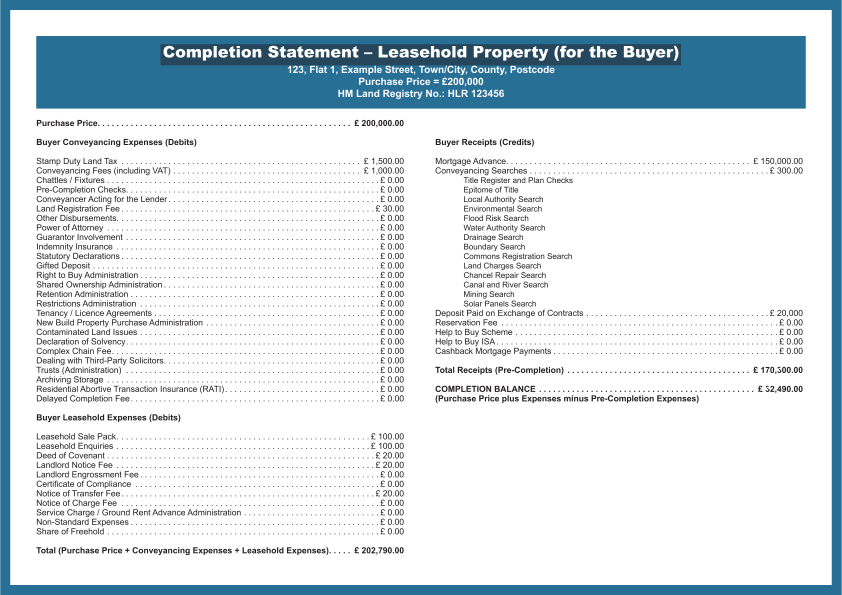
Image Source: Property Solvers
The moment you’ve been working towards finally arrives. Completion marks the end of your property journey and the beginning of your life as a homeowner.
Completion meaning
Completion is the day your house officially becomes your home. Ownership transfers from the seller to you, the final funds change hands, and those keys are finally yours to keep. This milestone typically happens on a weekday when solicitors can move money through the banking system, turning months of paperwork into a single, life-changing moment.
What happens on completion day
Completion day unfolds with careful precision:
- Your solicitor transfers the remaining balance to the seller’s solicitor via a CHAPS payment (same-day electronic transfer).
- Once funds are received, the seller’s solicitor confirms completion with all parties.
- The seller must vacate the property by 1pm (unless otherwise agreed).
- Keys are released, typically through the estate agent.
- You’re free to move in and the property officially becomes yours.
Behind the scenes, your solicitor handles the final administrative details — paying outstanding invoices, updating Land Registry records, and settling Stamp Duty obligations. The bureaucracy fades into the background as you prepare to walk through your own front door.
Completion vs exchange
While exchange of contracts creates the legal commitment, completion delivers the dream. The distinction matters:
- Timing: Completion typically happens 7-28 days after exchange, with many buyers choosing Fridays to allow a weekend for settling in.
- Money: At exchange, you pay the deposit (usually 10%); at completion, you pay the remaining balance.
- Legal status: Exchange creates contractual obligations; completion fulfils them when the property changes hands.
- Practical reality: After exchange, you’re committed but still waiting; after completion, you have both ownership and the keys in your hand.
Some buyers choose to exchange and complete on the same day, though this adds pressure to an already significant moment. Most prefer the breathing space between commitment and possession — time to organise removals, arrange time off work, and prepare for the transition from buyer to homeowner.

Image Source: Bramble & Wagg
When you’re about to make the biggest financial commitment of your life, understanding what a survey means becomes essential. This professional inspection isn’t just estate agent terminology — it’s your safeguard against costly surprises and your pathway to genuine peace of mind.
Survey types
Property surveys come in three distinct levels, each designed for different circumstances and needs:
RICS Home Survey Level 1 offers a basic health check using a traffic light system to flag urgent concerns. Perfect for newer properties in good condition, though it won’t include advice or valuation. Think of it as a quick visual assessment — useful, but not comprehensive.
RICS Home Survey Level 2 provides the middle ground that most buyers choose. Beyond the basic overview, it examines roof spaces and cellars, suggests further investigations where needed, and often includes valuation figures. This survey suits most properties in reasonable condition.
RICS Home Survey Level 3 delivers the most thorough examination available. Ideal for older properties, listed buildings, or homes showing signs of wear, it uncovers potential hidden problems and prioritises necessary repairs. If you’re buying something with character or complexity, this level offers the protection you need.
Survey costs
We understand that survey fees can feel like another expense when you’re already stretching your budget. Level 1 survey starts from £300-£900, Level 2 ranges between £400-£1,000, while Level 3 surveys cost £630-£1,500 or more for complex properties.
These fees reflect the time, expertise, and responsibility involved in examining your potential home. Each report is unique to your property at that specific moment — and while the cost might sting initially, it’s an investment in knowledge that could save you thousands later.
Survey importance for first-time buyers
Looking at another expense might feel overwhelming, but here’s the reality — surveys protect both your investment and your dreams. Finding structural issues, damp problems, or roof damage before you buy gives you real power to negotiate repairs or adjust the price.
More importantly, uncovering hidden defects like faulty wiring or plumbing problems means you won’t face nasty surprises after you’ve moved in. Whether you proceed with confidence, renegotiate terms, or decide to walk away, you’ll be making that choice with your eyes wide open. That’s worth every penny.

Image Source: Energy Saving Trust
Property listings flash letters and numbers — A, B, C, D ratings — that might seem like arbitrary grades from school. Yet these Energy Performance Certificate ratings tell a story about your future monthly bills, winter warmth, and summer comfort that’s worth understanding before you fall in love with a home.
EPC meaning
An Energy Performance Certificate measures how efficiently a property uses energy, much like the labels on your washing machine or fridge. Required by law whenever a property is built, sold, or rented, this document reveals your potential home’s energy consumption, typical running costs, and suggested improvements. EPCs stay valid for 10 years — so check the issue date when viewing properties. Sellers face fines without proper EPCs, making this more than just paperwork.
EPC ratings
The grading system runs from A (most efficient) to G (least efficient), with numerical scores that matter more than you might think:
- Band A: 92+ points (most efficient)
- Band B: 81-91 points
- Band C: 69-80 points
- Band D: 55-68 points (UK average)
- Band E: 39-54 points (minimum legal standard)
- Band F: 21-38 points
- Band G: 1-20 points (least efficient)
Properties below Band E cannot legally be sold or rented, while the average UK home achieves Band D. Higher ratings mean lower running costs — something that becomes wonderfully apparent when your first winter heating bill arrives.
Improving EPC score
Should you choose a property with room for improvement, several upgrades deliver both comfort and savings:
Loft and roof insulation cuts heat loss by up to 25% for around £300-£400 — often the most cost-effective improvement you can make.
LED lighting uses 90% less energy while lasting ten times longer than traditional bulbs — small changes that add up over time.
Double or triple glazing reduces heat loss by approximately 20% and typically adds 5-10 points to your EPC score.
Upgraded boilers can improve ratings by up to 40 points — transforming both efficiency and comfort.
Understanding these ratings helps you see beyond the estate agent’s description to the reality of living in your potential home. Because whether you’re dreaming of cosy winter evenings or manageable monthly bills, the EPC holds clues to both.

Image Source: We Buy Houses for Cash
Few words in property buying carry quite the sting of gazumping — a term that can turn your home-buying dreams into a nightmare just when you thought the hard work was over.
Gazumping meaning
Gazumping happens when a seller accepts your offer but then rejects it for a higher bid from another buyer before contracts are exchanged. The cruel reality is that until those contracts are formally signed, everything remains verbally agreed only — not legally binding. Around 18% of British house sales fall through each year due to gazumping, affecting roughly 200,000 transactions. Usually, sellers gazump when they receive more attractive offers or develop concerns about a buyer’s ability to complete the purchase.
How to avoid Gazumping
Protecting yourself from gazumping means taking control from the moment your offer is accepted:
Insist on market withdrawal — Make removing the property from the market a condition of your offer. No more viewings means fewer opportunities for rival bids to materialise.
Secure exclusivity — Ask your solicitor about arranging a “lock-out” agreement, preventing the seller from entertaining other offers for a set period. This gives you breathing room to complete surveys and finalise your mortgage.
Keep momentum — Speed is your friend here. The shorter the gap between offer acceptance and exchange, the safer you are. Stay in regular contact with your solicitor, respond to requests promptly, and push the process forward.
Build genuine rapport — Connect with the seller beyond just the transaction. When they see you as a person rather than just a number, they’re less likely to abandon you for a higher offer.
Legal protection against Gazumping
Here’s the frustrating truth — gazumping remains perfectly legal in England and Wales. Until contracts are exchanged, either party can walk away without legal consequences. Scotland offers better protection, where accepted offers become legally binding through the Law Society of Scotland’s framework.
For buyers in England and Wales, Home Buyers Protection Insurance provides some financial cushion. While it won’t prevent gazumping, it can cover your survey costs and legal fees if your purchase collapses. With average payouts of £975 in 2023/24 and policies starting at just £74, it’s relatively affordable peace of mind.

Image Source: We Buy Houses for Cash
Gazundering sits on the other side of the property coin from gazumping — and while you might never use this tactic yourself, knowing what it means helps you recognise when it’s happening around you.
Gazundering meaning
Gazundering happens when a buyer reduces their previously agreed offer just before contracts are exchanged. Think of it as the buyer’s version of gazumping — equally frustrating, equally legal, and equally capable of derailing entire property chains. Until contracts are formally exchanged, nothing legally binds a buyer to their original offer, which means this practice, however unfair it might feel, operates within the bounds of property law in both England and Wales.
Why Gazundering happens
The reasons behind gazundering tell their own stories:
- Survey revelations – Property surveys may uncover defects that genuinely affect value, giving buyers legitimate reasons to renegotiate
- Chain complications – If buyers experience gazundering themselves in their own property sale, they may have no choice but to reduce their offer
- Financial changes – Expired mortgage offers or shifting market conditions can impact what buyers can afford
- Strategic timing – Some buyers deliberately wait until the last minute, knowing sellers might accept a lower offer rather than restart the entire process
- Market conditions – Gazundering becomes more common in slower markets when buyers have more negotiating power
How to respond to Gazundering
Facing gazundering requires both practical thinking and emotional resilience:
First, ask for specific reasons behind the reduced offer. If based on survey findings, the concerns may be legitimate. Counter-offer rather than immediately accepting or rejecting — the buyer has already invested in surveys and legal work, giving you some leverage.
Work with experienced professionals who can handle gazundering attempts effectively and provide strategic advice. Set realistic asking prices from the start, as fairly priced properties leave buyers less room to justify last-minute reductions.
The choice ultimately comes down to this — whether accepting the lower offer makes financial sense compared to beginning the selling process again. Sometimes the most difficult decisions are also the most necessary ones.
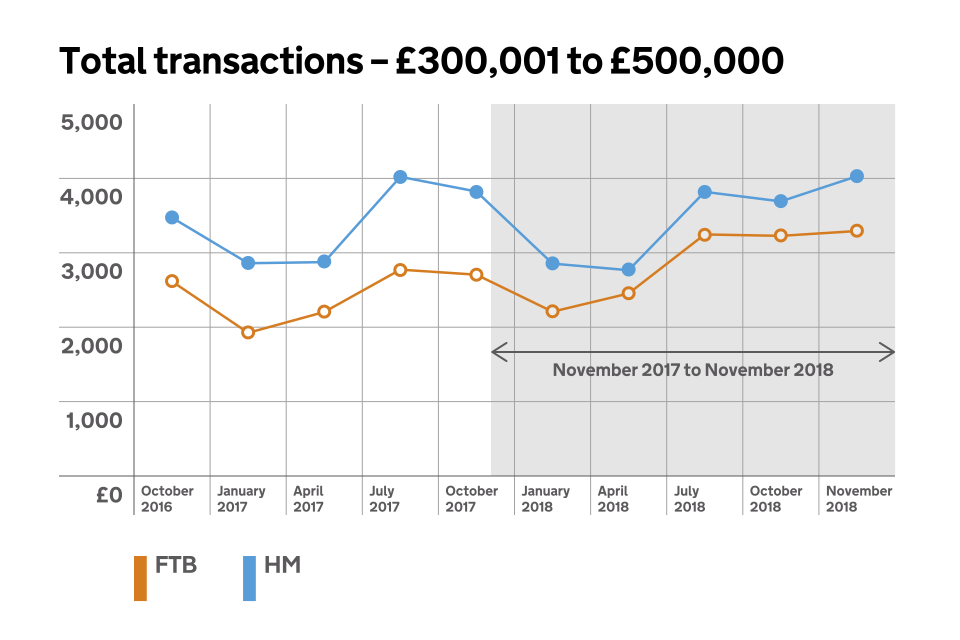
Image Source: GOV.UK
Stamp Duty might sound like something from a bygone era, but this government tax affects nearly every property purchase — and understanding it could save you thousands of pounds as a first-time buyer.
Stamp Duty meaning
Stamp Duty Land Tax (SDLT) is what you pay the government when buying residential property or land in England and Northern Ireland. The amount depends on three things: when you bought, how much you paid, and whether you qualify for relief. Scotland has its own system (Land and Buildings Transaction Tax) and Wales has another (Land Transaction Tax). Even if you don’t owe anything, you still need to complete the paperwork.
Stamp Duty calculator
Stamp Duty works on a tiered system — you only pay tax on the amount above each threshold. For standard purchases after April 2025:
Take a £350,000 property: you’d pay nothing on the first £125,000, then 2% on the next £125,000 (£2,500), then 5% on the remaining £100,000 (£5,000) — total of £7,500.
Stamp Duty for first-time buyers
Here’s where it gets interesting for first-time buyers. The government offers genuine relief, not just token savings. As of April 2025:
- Nothing to pay on properties up to £300,000
- 5% only on the portion between £300,001 and £500,000
That same £400,000 property? As a first-time buyer, you’d pay just £5,000 (5% on £100,000 above the threshold) instead of the standard £12,500. Properties over £500,000 don’t qualify for first-time buyer relief, though — standard rates apply.
With the average UK property price sitting at £268,548 in January 2025, many first-time buyers outside London pay nothing at all. This isn’t just about understanding terminology — it’s about keeping more money in your pocket for the things that matter when you’re starting out.

Image Source: Boon Brokers
When you’re ready to turn your property dreams into reality, a Mortgage Broker often becomes the guide who helps you find the right path through the maze of lending options.
What is a Mortgage Broker
A mortgage broker acts as your advocate in the lending world — someone who knows the market inside out and can match your unique circumstances with the right lender. Rather than you visiting bank after bank, they do the searching for you, examining deals across the entire market to find what works best for your situation. With around 80% of UK mortgages now arranged through professional advice, these specialists have become central to most people’s home-buying stories.
Every mortgage broker must hold full Financial Conduct Authority (FCA) certification, ensuring they meet strict professional standards. You’ll encounter different types: independent brokers offering “whole of market” access who can search every available lender, “tied” brokers who work exclusively with specific lenders, and “multi-tied” brokers who work with selected panels rather than the entire market.
Benefits of using a Mortgage Broker
Time becomes precious when you’re trying to secure your dream home, and brokers give you that gift back. They spend their days understanding market conditions, fee structures, and lending criteria — knowledge that saves you both time and money.
Many brokers can access exclusive deals that aren’t available to the general public, and their professional relationships often open doors that might otherwise remain closed. This proves especially valuable if your circumstances are complex — perhaps you’re self-employed, have a limited employment history, or your income doesn’t fit traditional lending boxes.
Beyond finding the right deal, they handle the paperwork, chase delays, and spot potential problems before they derail your purchase. It’s like having someone who speaks fluent “mortgage” working on your behalf.
How to find a good Mortgage Broker
Personal recommendations often prove most valuable — ask friends or family who’ve recently bought homes about their experiences. Once you have names, verify their credentials on the FCA register to ensure they’re properly regulated.
Prioritise brokers offering whole-of-market services who can genuinely search all available options. Be clear about fees upfront — some charge you directly, while others earn commission from lenders. The right broker will explain exactly how they’re paid and what services that includes.
Remember, this person will be handling one of the biggest financial decisions of your life. Choose someone who listens carefully, explains things clearly, and makes you feel confident about the journey ahead.

Image Source: Home Selling Expert
Property purchases rarely happen in isolation — they’re often part of an interconnected sequence that estate agents call a Property Chain. Understanding this concept could be the difference between a smooth purchase and months of uncertainty.
What is a Property Chain
Picture a line of dominoes, each one relying on the next to fall in sequence. Property chains work similarly — each buyer depends on selling their current home to fund their next purchase, while each seller needs their buyer’s funds to complete their own onward purchase. When buyer A purchases seller B’s house, seller B uses those funds to buy from seller C, who then buys from seller D.
We understand this can sound complicated, yet it’s surprisingly common. Chains can involve as many as ten properties, though most contain around three homes. Only about 10% of UK transactions happen without any chain involvement — meaning the vast majority of property purchases are connected to others in some way.
No onward chain explained
When you see “no onward chain” in a listing, it signals something valuable — the seller doesn’t need to buy another property before selling to you. They’ve already sorted their next move, whether that’s renting, moving in with family, or relocating abroad.
This differs from being “chain-free” as a buyer, which means you don’t need to sell a property to fund your purchase. As a first-time buyer, you’re automatically chain-free — often forming the beginning of someone else’s chain.
Chain-free advantages
Chain-free properties offer genuine peace of mind. Without multiple transactions needing to align perfectly, completions typically happen faster — sometimes in just 8-10 weeks rather than the usual timeline. You’ll sleep better knowing your purchase doesn’t depend on strangers successfully completing their own property deals.
The downside? Chain-free properties often cost more precisely because they offer this security. Many buyers willingly pay the premium for reduced stress and increased certainty. Because when one link in a chain breaks, the entire sequence can collapse — and that’s not a risk everyone wants to take with their dream home.
Valuation
A mortgage valuation is a basic assessment ordered by the lender to confirm the property is worth what you're paying. In Scotland, the Home Report valuation often serves this purpose, though lenders may also instruct their own.

Image Source: HomeViews
Property valuations seem straightforward enough — someone tells you what your future home is worth. Yet this piece of estate agent speak carries more weight than most first-time buyers realise, and getting it wrong could cost you thousands.
Valuation meaning
A property valuation captures your home’s worth at a specific moment in time. Professional valuers consider the property’s size, location, condition, and comparable local sales. They examine everything from room layout and storage space to the property’s age and structural elements. Unlike surveys that focus on condition, valuations determine market value — the difference between what you think you’re buying and what it’s actually worth.
Mortgage valuation vs market valuation
These two valuations serve different masters, and understanding the distinction protects your interests. A mortgage valuation exists solely for your lender’s peace of mind — verifying the property provides adequate security for their loan. It confirms whether the property matches what you’ve agreed to pay. You typically won’t receive a copy of this report, as it may rely on an Automated Valuation Model rather than a physical inspection.
A market valuation takes a different approach entirely. Performed by a chartered surveyor registered with the Royal Institution of Chartered Surveyors, this detailed assessment provides you with a thorough understanding of the property’s true market value based on multiple factors. This one belongs to you, not your lender.
Valuation tips for buyers
When valuations go sideways, knowledge becomes your strongest ally:
Down-valuations happen when the surveyor values the property lower than your agreed price, potentially derailing your mortgage offer. Your options include renegotiating with the seller, finding a larger deposit, or choosing a mortgage with higher loan-to-value.
Consider requesting your own independent valuation if something feels off — estate agents’ valuations may be inflated to secure your business. Before any valuation appointment, declutter and clean the property to create the best possible impression.
Property valuations tell a story about value, but they’re not the final chapter. They’re your chance to ensure the numbers match the dream you’re buying into.
Quick Reference Guide
Sometimes you need the facts at your fingertips — and that’s exactly what this comparison table provides. Whether you’re sitting in an estate agent’s office, reviewing mortgage options, or simply want to double-check something you’ve heard, this reference guide puts all 27 terms in one place.
Every property journey has its moments of uncertainty, and having clear information helps turn confusion into confidence. Use this table to compare options, understand timelines, and budget for the costs that matter most to your situation.
Keep this table handy during your property search. Understanding these terms helps you ask better questions, spot opportunities, and make decisions that truly serve your circumstances. After all, knowledge isn’t just about impressing estate agents — it’s about finding the home that’s right for you.
Conclusion
Your property journey tells a story — and now you have the vocabulary to write it with confidence rather than confusion. These 27 terms aren’t just definitions to memorise; they’re your compass for one of life’s most significant decisions.
We know the property market can feel like a maze designed by people who forgot you’re human, not a transaction. Yet here’s what changes everything — when you walk into that next viewing or sit across from an estate agent, you’re no longer the person wondering what “gazumping” means or why “no onward chain” matters. You’re someone who speaks the language, understands the game, and can make choices that truly serve your future.
The numbers matter, certainly. Knowing how LTV affects your mortgage rate or recognising your Stamp Duty savings protects your wallet in ways that compound over years. But beyond the financial mechanics lies something more profound — the quiet confidence that comes from understanding exactly what you’re agreeing to, what risks you’re taking, and what protections you have.
Every first-time buyer deserves to feel informed rather than intimidated. Whether you’re dreaming of Sunday mornings in your own garden, finally having space for friends to visit, or simply closing a door that’s truly yours, this knowledge helps turn those dreams into solid plans. Because when you understand the process, you can focus on what really matters — finding the home that fits your life, not just your budget.
The estate agents, solicitors, and brokers you’ll work with respond differently when they sense you understand what they’re discussing. It’s not about impressing anyone; it’s about being treated as a partner in your own purchase rather than someone who simply signs where pointed.
Most importantly, remember that behind all this terminology stands a simple truth — you’re not just buying property, you’re investing in your future self. Trust the knowledge you’ve gained, ask questions when things feel unclear, and know that every first-time buyer before you has walked this path with similar hopes and concerns. Your story deserves to unfold with clarity, confidence, and the deep satisfaction that comes from making informed choices about the place you’ll call home.
Frequently Asked Questions
What does “offers over” mean in Scotland?
“Offers over” is a pricing term used in Scottish property sales where the asking price represents the minimum amount the seller is willing to accept. Buyers are expected to submit bids above this figure, and in competitive markets, properties often sell for 10% to 20% above the offers over price. This system is unique to Scotland and differs from the negotiation-based approach used in England and Wales.
What is a closing date in Scottish property sales?
A closing date is a deadline set by the seller’s solicitor by which all interested buyers must submit their sealed bids for the property. All offers are opened simultaneously after the deadline, and the seller then chooses which offer to accept — typically the highest, though other factors such as the buyer’s chain-free status or speed of completion may also be considered. This blind bidding process is a distinctive feature of the Scottish property market.
What does “chain free” mean when buying a house?
“Chain free” means there is no chain of dependent property transactions linked to the sale. The seller does not need to sell another property in order to complete this one, which reduces the risk of delays or the sale falling through. First-time buyers are naturally chain free, which can make their offers more attractive to sellers who want a straightforward and faster transaction process.
What is the difference between “under offer” and “sold subject to contract”?
“Under offer” means a buyer has made an offer on the property that the seller is considering, but it has not yet been formally accepted and the property may still accept other offers. “Sold subject to contract” means an offer has been accepted but the legal paperwork has not yet been completed, so the sale is not yet legally binding. In Scotland, once missives are concluded the sale becomes legally binding, which provides stronger protection than the English system.
What does “Home Report” mean in Scottish property listings?
A Home Report is a mandatory document required by law for most residential properties being sold in Scotland. It consists of three parts: a single survey that assesses the condition of the property, a property valuation carried out by a chartered surveyor, and an energy performance certificate. The seller is responsible for commissioning and paying for the Home Report, and it must be made available to prospective buyers before or when the property is marketed.
FAQs
Q1. What is the difference between freehold and leasehold property? Freehold means you own both the building and the land it stands on indefinitely. Leasehold means you own the property for a fixed period but not the land. Freehold properties have no ground rent or service charges, while leaseholds typically involve ongoing payments to the freeholder.
Q2. How can I protect myself from gazumping? To avoid gazumping, ask the seller to remove the property from the market once your offer is accepted. Consider securing an exclusivity agreement, maintain momentum in the buying process, and build a good rapport with the seller. You can also consider Home Buyers Protection Insurance to cover potential losses if the sale falls through.
Q3. What is Stamp Duty and do first-time buyers have to pay it? Stamp Duty is a government tax on property purchases. First-time buyers in England and Northern Ireland don’t pay Stamp Duty on properties up to £300,000. For properties between £300,001 and £500,000, they pay 5% on the portion above £300,000. For properties over £500,000, standard rates apply.
Q4. What does LTV mean and why is it important? LTV stands for Loan-to-Value ratio, representing the proportion of the property’s value you’re borrowing through a mortgage. A lower LTV typically means better mortgage rates. There are crucial thresholds (95%, 90%, 80%, 75%, and 60%) where rates improve noticeably, potentially saving you thousands over your mortgage term.
Q5. What’s the benefit of using a mortgage broker? A mortgage broker can save you time by searching the market on your behalf and often save you money by finding competitive deals. They can access products unavailable to the general public, handle paperwork, and provide valuable expertise, especially if you have complex financial circumstances. Many brokers offer whole-of-market services, searching all available options.